
Home » Blood Pressure Guide » What Is a Blood Pressure Emergency? » Is High Blood Pressure an Emergency?
Is High Blood Pressure an Emergency?
Author: Dr. Vrolijk | Updated: August 23, 2025 | Disclaimer | Review Process | References
High blood pressure can feel scary, especially when you’re not sure if you need emergency care. You want to stay safe, but you also don’t want to overreact.
This page explains when high blood pressure is an emergency and what to expect if you go to the emergency room.
On This Page:

Emergency vs. Urgent
It's About Symptoms, Not Just Numbers
The Role of High Blood Pressure in Emergencies
- High blood pressure makes health emergencies more likely (like stroke)
- Medical emergencies can cause blood pressure to be high all of a sudden
High Blood Pressure Is an Emergency When
- An organ (like your brain or heart) is being hurt by your high blood pressure
- A medical emergency (like bleeding in your brain) is causing high blood pressure
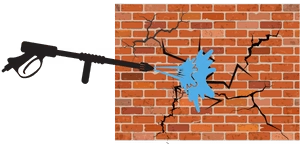
High blood pressure (hypertension) is like a pressure washer against a brick wall. Your arteries are the wall.
- Over time the pressure washer weakens the wall
- When the water pressure gets really high, the wall is more likely to fall apart
- If the wall falls apart, everything behind it (your body) will get damaged
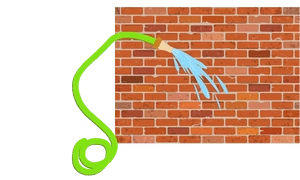
Normal blood pressure is like a regular hose against a brick wall. Your arteries are the wall.
- There is no damage to the wall
- The wall is less likely to fall apart even if it’s weak
- Everything behind the wall (your body) is protected
This Is Why High Blood Pressure Makes Medical Emergencies More Likely
What Happens in the Emergency Room?
The Medical Team Will Check for Life Threatening Problems
- They’ll ask questions about how you feel
- They’ll check your blood pressure again to confirm it’s still high
The Emergency Room (ER) Team Will Follow These Steps:
- Check if your high blood pressure has damaged your body
- Treat any emergent problems (like stroke or heart attack)
- Send you home if it’s safe (no evidence of damage needing immediate treatment)
- Admit you to the hospital if you need treatment right away
If You Have No Symptoms
- You may get a blood test to check if your kidneys are damaged (called creatinine)
- The ER team may or may not give you medicine right away, depending on:
- Whether you have a regular doctor for follow-up
- How long your blood pressure has been high
- Your other health conditions
- How high your blood pressure numbers are
If You Have Symptoms
Your care will be different if you have symptoms. This is because the symptoms might mean a part of your body is injured.
Symptoms That Are Concerning
- New chest pain
- Trouble breathing
- Confusion or feeling “out of it”
- Trouble walking or moving
- Trouble seeing
- Signs of kidney problems (on labs)
What happens next in the ER:
- Assessment – The medical team will assess your symptoms
- Testing – They’ll run tests to determine if you have a medical emergency
- Treatment plan – Your treatment will depend on your specific symptoms and what the tests show
- Next steps – Once you’re stable, they’ll decide the safest plan for you
Quick Answers
Call your doctor:
Either number is 180/110 or higher AND you feel normal
Go to the hospital right away if you have any of these symptoms:
- Feel confused, such as:
- Trouble understanding what is happening around you
- Have a harder time than usual making simple choices
- Have trouble moving:
- It’s harder to walk than usual
- It’s harder to use your hands or arms than usual
- Lose feeling in part of your body
- Have trouble talking or breathing
- Have new chest or back pain
- Your pee (urine) is brown or red
- Your vision changes quickly
High blood pressure makes a stroke more likely over time. That’s why it’s important to keep blood pressure low over time. A stroke can happen even when blood pressure isn’t very high right now.
There is no blood pressure that will cause a stroke. So, you should focus on how you feel.
Remember F-A-S-T: Face drooping, Arm weakness, Speech difficulty, Time to call 911. Also watch for sudden feeling imbalanced or vision loss. These need immediate emergency care.
It’s a good idea to still talk to your doctor. Together you can figure out if there’s a pattern. You should keep checking your blood pressure 1-2 times a day. Write down your readings and how you feel.
Only if you have concerning symptoms (see the first question’s answer for a list). If you feel normal, you should call your doctor.
You don’t need to call 911 just for high blood pressure. You should call if you have concerning symptoms and need immediate help.
Damage usually happens over months to years. But how much damage and how long that takes depends on your body. Some people are more susceptible to high blood pressure and are more likely to have problems.
What to Read Next
All of Our Pages on Blood Pressure

Resources We Used
2017 ACC/AHA/AAPA/ABC/ACPM/AGS/APhA/ASH/ASPC/NMA/PCNA Guideline for the Prevention, Detection, Evaluation, and Management of High Blood Pressure in Adults: A Report of the American College of Cardiology/American Heart Association Task Force on Clinical Practice Guidelines | JACC. Accessed July 11, 2025.
Basile J, Bloch M. Overview of hypertension in adults. UpToDate. Published online October 18, 2024. Accessed July 11, 2025.
Effects of different regimens to lower blood pressure on major cardiovascular events in older and younger adults: meta-analysis of randomised trials. BMJ. 2008;336(7653):1121-1123.
Elliot W, Varon J. Evaluation and Treatment of Hypertensive Emergencies in Adults. UpToDate. Published online June 25, 2025. Accessed July 11, 2025.
Flynn JT, Kaelber DC, Baker-Smith CM, et al. Clinical Practice Guideline for Screening and Management of High Blood Pressure in Children and Adolescents. Pediatrics. 2017;140(3):e20171904.
Mann J, Flack J. Hypertension in adults: Initial drug therapy. UpToDate. Published online June 25, 2025. Accessed July 11, 2025.
Varon J, Elliot W. Management of severe asymptomatic hypertension (hypertensive urgencies) in adults. UpToDate. Published online October 18, 2023. Accessed July 11, 2025.
Review Process
We take quality seriously. Every health guide goes through this review process:
Medical Review
At least one doctor in the content field reviews all health information
MD, DO, PhD/PsyD, OD, DMD, DDS depending on the content
Doctors check that all medical facts are correct
We update our content when new medical evidence comes out
Sources & Evidence
- All content is based on current medical guidelines and research
- We cite our sources so you can learn more
Reading Level Check
- We test all content to make sure it’s easy to read
- We avoid medical jargon or explain it clearly when needed
- We break down complex topics into simple steps
Accessible Design
- We design materials to work for people with different needs
- We use clear fonts and good color contrast
- We organize content with clear headings and simple layouts
- We follow web accessibility guidelines
We regularly review and update our materials based on:
- New medical research
- User feedback
- Changes in medical guidelines
You can find the last update date at the top of each page.
Found an error or have a suggestion?
Contact Us – We want to fix it as soon as possible!
Disclaimer
The information provided by HealthEd for Everyone is for educational and informational purposes only and is not intended as medical advice. While we strive to ensure the accuracy and timeliness of this information, it should not be used as a substitute for professional medical consultation, diagnosis, or treatment. Always seek the advice of your physician or other qualified health provider with any questions you may have regarding a medical condition.
HealthEd for Everyone does not endorse or recommend any specific tests, physicians, products, procedures, opinions, or other information that may be mentioned within this material. Reliance on any information provided by HealthEd for Everyone is solely at your own risk.
In no event shall HealthEd for Everyone be liable for any direct, indirect, consequential, special, exemplary, or other damages arising therefrom.
By accessing this information, you acknowledge and agree to these terms and conditions. If you think you may have a medical emergency, call your doctor, go to the nearest hospital, or call emergency services immediately.
Don't see what you need?
Tell us what health topics confuse you. Your suggestions help us decide what to create next.