Home » Mental Health: Getting Help » Getting Help in a Mental Health Crisis
Getting Help in a Mental Health Crisis
Author: Dr. Vrolijk | Updated: August 23, 2025 | Disclaimer | Review Process | References
Not sure if what you’re experiencing counts as a crisis? Worried about what actually happens at the hospital? Wondering if you need help right now or can wait for an appointment?
This page explains what’s a mental health crisis, what to expect if you go to the hospital, and when you might need to stay for treatment.
Are you supporting someone else? Check out our page on Supporting Someone in a Mental Health Crisis
On This Page:

Get Help Right Now
Call 988 • Text 988 • Chat 988 • Call 911 • Go to Emergency Room
More Free, Confidential Hotlines
Trevor Project (Ages 13 – 24)
- Call 866-488-7386
- Text “start” to 678678
- Chat online at TrevorProject.org
Trans Lifeline
- Call 877-565-8860 in the US
- Call 877-330-6366 in Canada
- Website: Trans Lifeline
LGBT National Lifeline
- Call 888-843-4564
- Coming out support line 888-688-5428
- Youth talkline 800-246-7743
- Senior hotline 888-234-7243
- Hours:
- Mon-Fri 2pm-11pm ET
- Sat 12-5pm ET
National Domestic Violence Hotline
- Call 800-799-SAFE (7233)
- Text “start” to 88788
- Chat online at theHotline.org
RAINN National Sexual Assault Hotline
- Call 800-656-HOPE
- Text “hope” to 64673
- Chat online at rainn.org
- Message on WhatsApp
Veterans Crisis Line
- Call 988 then press 1
- Text 838255
- Chat online VeteransCrisisLine.net
What Is a Mental Health Crisis?
A mental health crisis is when your actions or what you’re about to do might:
- Hurt yourself
- Hurt someone else
- Make it hard to take care of your basic needs like drinking water or eating
You can be in crisis even if you look fine on the outside. You may be doing well at work but having more and more thoughts about hurting yourself. These thoughts can progress to thinking about how you would hurt yourself. This slow progression can make it hard to realize you need help.
If you’re unsure, you can call, text, or message a free, confidential hotline. They can help you figure out if you need emergency help. And they can help you find other kinds of help.
Other Words People Use
Some common words people use that also mean a mental health crisis:
- Mental breakdown or nervous breakdown: When someone feels like they can’t deal with things anymore. It’s like hanging on by a thread and then the thread breaks.
- Psychotic break: When someone hears or sees things that other people can’t see or hear.
- Psychiatric emergency: A situation where someone might hurt themselves or someone else. This isn’t always obvious – someone might seem like they’re managing okay but still need emergency help.
- Emotional crisis: Usually means the same thing as a mental health crisis.
Important: Someone can need emergency help for all of these situations. You can call a hotline to get help figuring out what kind of help you need.
What to Expect at the Hospital
Going to the hospital for mental health can feel scary. You’re trusting strangers during a vulnerable time. This can be even harder if you’ve had bad experiences with healthcare. Or if people like you have faced bias in medical settings. Your concerns about how you’ll be treated are real and valid.
It takes courage to seek help when you’re not sure what to expect. But when your safety is at risk, getting help is safer than facing a mental health crisis alone. It’s just like if you broke your leg. You’d risk going to the hospital to get the care you need.
During Your Stay
- Your support person can help speak up for you
- Talk to your “charge nurse” (the nurse in charge of managing that part of the hospital)
- Ask to speak with the attending physician (the doctor in charge)
- Ask for patient relations (also called patient advocacy). They review complaints and may contact you later (this takes time)
If Problems Continue
- Contact the National Disability Rights Network
- Contact your state’s medical licensing board
If You Want to Leave but Are on a Medical Hold
- Ask to discuss this with the attending physician to understand their reasoning
- Once a court order is filed, it becomes a legal matter with specific rights and timelines
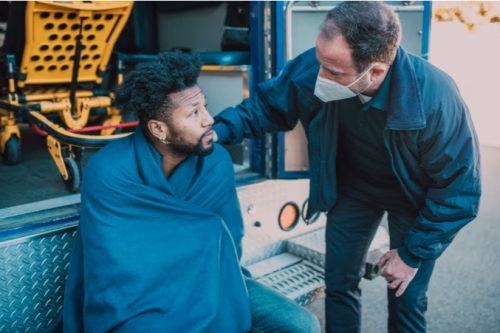
At the Emergency Room
What to Expect
- Staff will ask about what you’re experiencing, your medications, and your medical history
- You can usually have a support person with you during evaluations
- They’ll do a physical exam, urine and blood tests
- You may get an EKG to check your heart
Why This Happens
- They need to rule out medical conditions that can look like mental health crises
- This happens even if they don’t think you took anything. They don’t want to miss anything, so the hospital has a list of tests that everyone gets
- The goal is to make sure you’re medically safe and understand what’s causing your symptoms
Psychiatric Emergency Department
- Some hospitals have separate psychiatric emergency departments. You can go there or the regular emergency room. Both will help you get to where you need to go
- You will usually need to wait to see someone and while they plan your care
- You will see a mental health provider who will figure out what you need
- They’ll ask detailed questions about your mental health history, current crisis, and safety
- They will help you come up with a plan
Will They Make Me Stay at the Hosptial?
Most of the time, this is a decision between you and your doctor. You both work together to figure out what you need to get through this health emergency.
Being forced to stay in the hospital (involuntary holds) exist but are used thoughtfully. What you should know:
- Laws about involuntary holds are different by state and are changing
- Most medical providers only do this when the risk of you hurting yourself or others outweighs taking away your freedom
- Doctors want to help, not harm. They are trying to make the best decision for your health.
- If you disagree with a hold, you have legal rights and can contest it.
What if I Have to Stay?
You’ll get intensive treatment to help you recover:
- You’ll be in a safe environment with 24-hour medical support
- You’ll work with a doctor who will help you figure out if medication will help
- You may have therapy
- You may attend group sessions and activities
- Staff will help you plan for continuing care when you’re ready to leave
Length of stay varies just like any other health problem. It depends on your condition and what you need to heal.
About Medications
- Decisions about medication are usually made with your input
- The only exception is if you’re actively harming yourself or may hurt others in that moment
- You can ask questions about any medication and why it’s recommended
Quick Answers
The most difficult part can last hours to weeks, but recovery time is different for everyone. Think of it like recovering from the flu – some people feel better in a few days, others need weeks.
Getting professional help can make the crisis shorter and help prevent future ones.
Yes. Mental health crises are treatable, just like other medical emergencies.
After you recover, you may need ongoing support like therapy or medication. Many people find their lives are better after getting help during a crisis, especially if they get connected to treatment for the first time.
This fear is understandable, especially if you’ve felt like you had to prove your mental health condition before. Your experience is real and deserves medical care.
Most people don’t know if they need emergency care or another type of help. Even doctors have trouble knowing when they’re the patient. It’s okay to go to the emergency department or call a hotline if you’re unsure – it’s their job to figure out what would help you.
Hospitals provide medical leave documentation for work and school. Both legally have to accommodate you when you’re dealing with a medical emergency.
For other responsibilities, call or text a neighbor or someone you trust. You don’t have to explain details – you can say you’re out of town for a family emergency. Hospital social workers can also help you figure out what to do.
Try to remember that getting help now will allow you to take care of your responsibilities in the long run. You’ll get better faster, just like you would if you got medical care for an injury.
This worry is very common and makes sense. Many people have lived with depression or anxiety for so long, it’s hard to imagine feeling different.
Medication makes symptoms like intense sadness improve or go away. This gives you more space to be who you are beyond your mental health condition. You’re still you – just with a tool to treat chemical imbalances in your brain.
What to Read Next
All of Our Pages on Mental Health

Resources We Used
Clinical experience from multiple clinicians
Review Process
We take quality seriously. Every health guide goes through this review process:
Medical Review
At least one doctor in the content field reviews all health information
MD, DO, PhD/PsyD, OD, DMD, DDS depending on the content
Doctors check that all medical facts are correct
We update our content when new medical evidence comes out
Sources & Evidence
- All content is based on current medical guidelines and research
- We cite our sources so you can learn more
Reading Level Check
- We test all content to make sure it’s easy to read
- We avoid medical jargon or explain it clearly when needed
- We break down complex topics into simple steps
Accessible Design
- We design materials to work for people with different needs
- We use clear fonts and good color contrast
- We organize content with clear headings and simple layouts
- We follow web accessibility guidelines
We regularly review and update our materials based on:
- New medical research
- User feedback
- Changes in medical guidelines
You can find the last update date at the top of each page.
Found an error or have a suggestion?
Contact Us – We want to fix it as soon as possible!
Disclaimer
The information provided by HealthEd for Everyone is for educational and informational purposes only and is not intended as medical advice. While we strive to ensure the accuracy and timeliness of this information, it should not be used as a substitute for professional medical consultation, diagnosis, or treatment. Always seek the advice of your physician or other qualified health provider with any questions you may have regarding a medical condition.
HealthEd for Everyone does not endorse or recommend any specific tests, physicians, products, procedures, opinions, or other information that may be mentioned within this material. Reliance on any information provided by HealthEd for Everyone is solely at your own risk.
In no event shall HealthEd for Everyone be liable for any direct, indirect, consequential, special, exemplary, or other damages arising therefrom.
By accessing this information, you acknowledge and agree to these terms and conditions. If you think you may have a medical emergency, call your doctor, go to the nearest hospital, or call emergency services immediately.
Don't see what you need?
Tell us what health topics confuse you. Your suggestions help us decide what to create next.