Home » Blood Pressure Guide » Managing Blood Pressure Anxiety
Managing Blood Pressure Anxiety
Author: Dr. Vrolijk | Updated: August 23, 2025 | Disclaimer | Review Process | References
Does your first reading always seem high? Do you check multiple times hoping for a “better” number? Are you putting off checking because you’re scared of what you’ll see?
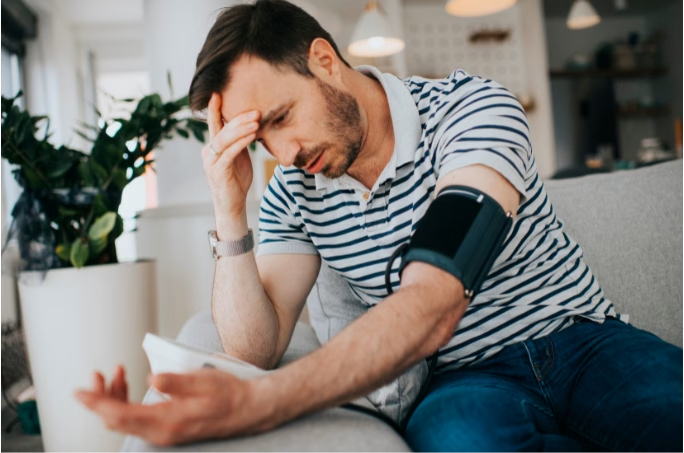
If you feel anxious when taking your blood pressure, you’re not alone. Many people worry they’re making their numbers worse just by stressing about them. That worry can turn into a cycle that’s hard to break.
This page explains why anxiety raises blood pressure, common causes of high readings, and how some people deal with this worry.
On This Page:
Anxiety Really Does Raise Blood Pressure
If you’ve noticed your blood pressure is higher when you’re stressed or worried about taking it, you’re experiencing something real and very common.
Blood Pressure Rises When We're Nervous, Anxious, or Upset
- This is normal and healthy
- Everyone has blood pressure fluctuations
- As long as you don’t have a high risk health problem (like an aneurysm), a short period of high blood pressure is extremely unlikely to cause a stroke or heart attack
Reasons to See Your Doctor
- Your blood pressure is high out of the blue, even when you feel calm or happy
- You have other physical symptoms such as chest pain, nausea, feeling dizzy, headache, or any other concerning symptoms
- You feel very distressed about your blood pressure elevation
- You have other health problems that make blood pressure control more important (eg, heart disease, previous stroke)
Common Reasons for a High Blood Pressure Reading
First Reading Effect
Many people notice their first reading is higher! Some reasons why your first reading can be higher:
- You didn’t get a chance to sit before taking your first reading
- You may feel anxious when you first take your blood pressure
The White Coat Effect (or Hypertension)
This is when someone who isn’t being treated for high blood pressure has
- High blood pressure readings at the doctor’s office
- Normal blood pressure readings at home
The Alerting Phenomenon
This happens when the act of checking your blood pressure itself makes you anxious, which then raises your blood pressure.
Usually it goes something like: “I’m worried about what this reading will be” → you feel anxious → your blood pressure goes up → you see a high reading → you worry more.
Environmental
There are tricks to getting an accurate blood pressure reading. Some of the reasons why you might have a falsely high reading include:
- Being rushed
- Arm below where your heart is
- Wrong cuff size
- Having to pee
Ways People Sometimes Deal with This Anxiety
Many people worry they are making their blood pressure worse by worrying about it. We all know the dangers of high blood pressure. As a result, most people feel nervous about a high reading. It’s hard to tell which is causing which!
Your likely worried for a very understandable reason: You care about your health.
Often, people will deal with this one of two ways:
- Avoid checking
- Check more than they should
Are You Avoiding Taking Your Blood Pressure?
- You feel too worried or scared to check
- You put off checking for weeks or months
- You avoid doctor visits because they might check your blood pressure
If so, you can try
- Pick 1-2 times a day to check
- Accept that numbers might be higher when you’re worried – this is normal
- Keep checking on your schedule even when it feels hard
Are You Checking Your Blood Pressure Too Often?
- Checking multiple times per day “just to be sure”
- Taking your blood pressure every time you feel stressed
- Checking immediately after seeing a high reading to “see if it went down”
- Feeling like you can’t relax until you get a “good” number
If so, you can try
- Pick 1-2 times during the day to check your blood pressure
- Each time take your blood pressure, write down the number, wait 5 minutes, take it 1 more time (2 times total)
- Don’t check again even if you feel anxious
Quick Answers
Anxiety can raise blood pressure temporarily, sometimes by 10-20 points or more. This is a normal body response and usually returns to baseline when you feel calm.
First readings can be high because:
- You haven’t had time to relax
- You may feel anxious about starting
This is why doctors recommend taking two readings. It gives your body time to relax. And you may feel less anxious.
Yes! White coat effect happens when your blood pressure is high at the doctor’s office but normal at home. This is thought to be due to anxiety about medical settings. You usually don’t have time to rest before taking your blood pressure at the doctor’s office. This can make it higher as well.
Yes! Worrying about blood pressure tells your body there might be danger. So, your body reacts and raises your blood pressure. Often, this means you have higher blood pressure readings because you’re anxious while taking it. Which can make many people feel more anxious. This can create a cycle. Read about how to take your blood pressure when you feel anxious.
It depends. There are two reasons for this:
White coat effect: Some people get accurate readings at home because they feel anxious at the doctor’s office.
Masked hypertension: Some people get accurate readings at the doctor’s office but lower readings at home. This happens when you have high blood pressure at other times of the day but not during your doctor visit.
How to know which readings to trust:
- Bring your home monitor to the doctor’s office to check if it matches their equipment
- Take your blood pressure regularly at home and keep a log
- Make sure you’re following proper technique [ADD LINK]
- Share both your home and office readings with your healthcare provider – they can help you understand the pattern
Taking your blood pressure on a regular schedule (not just when you’re anxious) can help reduce worry over time. Read about how to take your blood pressure when you feel anxious.
Learning how to make sure you’re getting the right reading can help too. Learn more about how to take your blood pressure.
What to Read Next
All of Our Pages on Blood Pressure

Resources We Used
Accessed July 15, 2025.
Whelton PK, Carey RM, Aronow WS, et al. 2017 ACC/AHA/AAPA/ABC/ACPM/AGS/APhA/ASH/ASPC/NMA/PCNA Guideline for the Prevention, Detection, Evaluation, and Management of High Blood Pressure in Adults: A Report of the American College of Cardiology/American Heart Association Task Force on Clinical Practice Guidelines. Hypertension. 2018;71(6):e13-e115.
Review Process
We take quality seriously. Every health guide goes through this review process:
Medical Review
At least one doctor in the content field reviews all health information
MD, DO, PhD/PsyD, OD, DMD, DDS depending on the content
Doctors check that all medical facts are correct
We update our content when new medical evidence comes out
Sources & Evidence
- All content is based on current medical guidelines and research
- We cite our sources so you can learn more
Reading Level Check
- We test all content to make sure it’s easy to read
- We avoid medical jargon or explain it clearly when needed
- We break down complex topics into simple steps
Accessible Design
- We design materials to work for people with different needs
- We use clear fonts and good color contrast
- We organize content with clear headings and simple layouts
- We follow web accessibility guidelines
We regularly review and update our materials based on:
- New medical research
- User feedback
- Changes in medical guidelines
You can find the last update date at the top of each page.
Found an error or have a suggestion?
Contact Us – We want to fix it as soon as possible!
Disclaimer
The information provided by HealthEd for Everyone is for educational and informational purposes only and is not intended as medical advice. While we strive to ensure the accuracy and timeliness of this information, it should not be used as a substitute for professional medical consultation, diagnosis, or treatment. Always seek the advice of your physician or other qualified health provider with any questions you may have regarding a medical condition.
HealthEd for Everyone does not endorse or recommend any specific tests, physicians, products, procedures, opinions, or other information that may be mentioned within this material. Reliance on any information provided by HealthEd for Everyone is solely at your own risk.
In no event shall HealthEd for Everyone be liable for any direct, indirect, consequential, special, exemplary, or other damages arising therefrom.
By accessing this information, you acknowledge and agree to these terms and conditions. If you think you may have a medical emergency, call your doctor, go to the nearest hospital, or call emergency services immediately.
Don't see what you need?
Tell us what health topics confuse you. Your suggestions help us decide what to create next.