A Note from Aaron
I don’t know about you, but I find it hard to take my own advice especially when it comes to my health. I wish I could say I’ve only done this a handful of times. The truth is I’ve lost track. I’ve worsened concussions, a hernia, and ended up with severe autistic burnout during residency.
Three years ago I started taking steps to change this. I’ll be honest, therapy has been key. I’ve had to look at why taking time for my health feels scary. I discovered that one reason was that I felt I had to prove myself as someone with a neurodiverse brain. Our culture values productivity so highly that I leaned into it at my own detriment.
This is all to say why it was hard to decide to prioritize my health this May. I’d tell any volunteer or employee to do exactly that, but I found it hard to give myself the same permission. I’ll still be available to all of our amazing volunteers and continue running our programs. But I am pushing back meetings or projects to June when possible. There won’t be a new blog post this month, which is the first time we’ve skipped one. We’ll be back in June.
Please reach out if you have any thoughts or questions. While I may take longer than normal to respond, I want to hear what you think.
Thank you all for your support,
Aaron
Help Us Create “I Can Go to the Doctor”
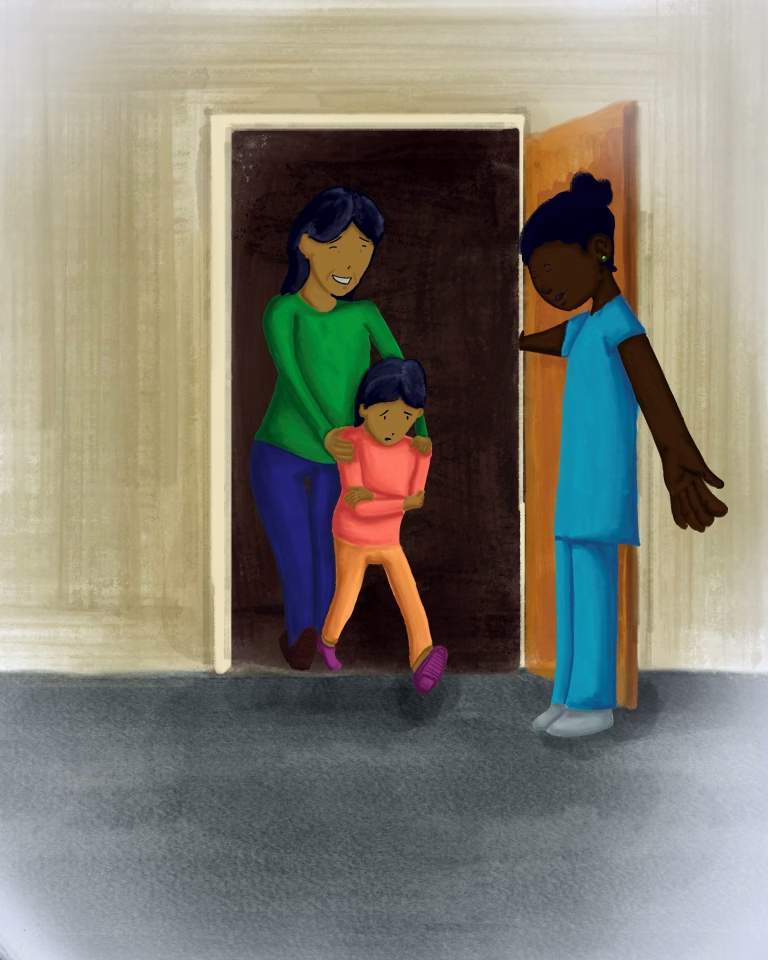
“I Can Go to the Doctor” is the next book in our children’s series. It walks kids through every step of a doctor’s visit, from the waiting room to leaving the building. The book is written for autistic kids, with sensory coping strategies, social scripts, and ways to ask for what you need. It’s also helpful for any child who does better when they know what’s coming.
Aaron is writing the book with a pediatrician at the University of Michigan who plans to use it with her own patients with autism. Rosie is working on the illustrations. The book will be 30 pages and free to anyone who needs it.
Our goal: $7,500 to fund the whole book.
Your donation funds the writing, design, creation of accessible versions, and illustration:
- $25 helps fund a page
- $100 funds a page of Rosie’s illustration
- $250 funds a completely finished page
Can’t donate right now? Share our fundraising page with 5 people who care about kids’ health, autism support, or making medical visits less scary.
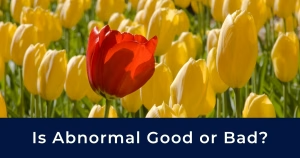
Is Abnormal Good or Bad?
Seeing “abnormal” on a test result or in your medical chart is understandably stressful. Not being normal seems like a bad thing. But in medicine, “abnormal” just means different from most people. It can be a good difference, a bad difference, or just a difference.
This month’s post breaks down what “abnormal” actually means, the four ways it can show up in your chart, and questions you can ask your medical team to find out what your result means for you.
You’ll learn:
- Why “abnormal” doesn’t mean the same thing as “wrong”
- When abnormal is neutral, good, bad, or unclear (with examples)
- Why two common reactions (avoiding it or obsessing over it) can both backfire
- Specific questions to ask your medical team
How to Support Our Work
Donate
The fundraiser above is for “I Can Go to the Doctor.” If you’d rather support our overall work (website, print materials, new resources), you can donate to our general fund.
Volunteer
We’re a small team and we grow through people who want to help. Right now we’re looking for:
- Someone with fundraising or marketing experience to strengthen our donor campaigns
- WordPress and Elementor help to build new pages and improve existing ones
- Help keeping our projects, deadlines, and volunteer tasks organized
If any of that sounds like you, or if you have other skills to offer, email info@HealthEd4Everyone.org
Share Your Ideas
What health topics confuse you? What do you wish your doctor had time to explain?
Email us: info@HealthEd4Everyone.org
Spread the Word
Know someone who might benefit from easy-to-understand health information? Forward this newsletter or share HealthEd4Everyone.org