Home » For Families & Kids » Helping Your Child Prepare for an Appointment
Helping Your Child Prepare for an Appointment
Author: Dr. Vrolijk | Updated: August 23, 2025 | Disclaimer | Review Process | References
Does your child cry or refuse to go to doctor appointments? Do you feel stressed trying to get them ready for visits?
This page helps you understand what information helps children feel more prepared and help them express their fears. Below are concrete things you can do like planning for scary moments during the appointment.
On This Page:

Talk about What Will Happen
We all feel more nervous when we don’t know what’s going to happen. You can help your child prepare by explaining what to expect. This can help you figure out what might be most stressful for them. And you two can think about ways to handle the worry together.
- Use simple, honest terms
- Let them know why the visit is important for their health
- Be truthful about procedures that might hurt
- Avoid promising “no pain” if that’s not realistic
- Tell them the order things will happen: First we’ll check in, then we’ll wait, then we’ll see the doctor
- Explain how long things might take (if you know): The shot will hurt for a few seconds, then it will be over
- Give them choices when you can:
- Where to sit during the exam (e.g. your lap, exam table)
- What they want to look at during a procedure like a shot (e.g. a video, the wall)
- If they want to hold someone’s hand
- Whether they want to hold a toy or other item
✷ If You Don’t Know – It’s common to not know what or when things will happen. Before your visit you can call the doctor’s office and ask. Or you can ask staff during the visit.
- Compare it to another time they were brave: Remember when you were brave at the dentist?
- Remind them about the last visit: You did such a good job last time we came here
Stories about going to the doctor can help your child know what to expect. They can see other kids deal with feeling worried or scared at the doctor’s too. Make sure you pick something that’s appropriate for their age.
Supporting Your Child's Feelings
It’s okay for your child to feel nervous. The goal isn’t to get rid of all worry, but to help them learn to manage it.
- Ask open questions during calm moments (not right before bed)
- Listen without immediately trying to “fix” their worries
- Let them draw or act out their concerns if talking is hard
- Summarize what you heard: “It sounds like you’re worried it will hurt”
- Avoid saying “don’t worry” or “it’s no big deal”
- Share one of your own similar concerns: “I get nervous about needles too”
- Tell them it’s okay to cry during the appointment
- Explain that everyone cries sometimes when they’re scared
- Tell them your own simple coping tricks
- Let them see you use these strategies in daily life
- Ask what they think might help them
- Remind them who will be there with them
- Explore how the adult with them can be supportive (e.g. hold their hand)
- Practice deep breathing together before you go
- Create a comfort plan (what to bring, who holds their hand)
- Role-play the visit with stuffed animals or dolls
- Find more tools: Quick Ways to Help Kids Feel Calmer
✷ Younger kids are still developing these skills. Keep practicing at each visit. They’ll get better with time. Even if they can’t manage anxiety yet, knowing what will happen helps them feel more secure.
Planning Ahead
Bring Comfort Items
- Let your child choose one special item (stuffed animal, small toy, or blanket)
- Pack headphones with favorite music or stories
- Bring a small snack and water (check if eating is allowed)
- Pack quiet activities for waiting (books, coloring supplies, small games)
Pack Sensory Toys
- Pick a small item that’s interesting to touch
- For example: Fidget toys or a stuffed animal
- These help distract and help calm during waiting or procedures
- Try hand massage, thumb war, or “I Spy” games at home first
- Let your child play with their sensory toys
- Explore more strategies: Quick Ways to Help Kids Feel Calmer
- What to wear to feel confident or comfortable
- Whether they want to hold someone’s hand during procedures
- What coping strategy to use if they feel nervous
- A special activity or small reward for afterwards
A small reward gives your child something positive to look forward to after the visit.
- Let your child help choose the reward before you go
- Keep it simple: a trip to the park, a favorite snack, or extra screen time
- Follow through even if the visit was difficult
What to Read Next

Quick Calming Techniques
Simple activities to help children manage worry.

Help for a Worried Child
A step-by-step way to talk through your child's fears, understand what's behind them, and make a plan together.
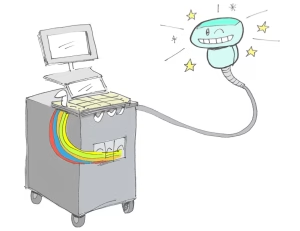
I Can Get an Ultrasound
Illustrated book that walks through what happens during an ultrasound.

Resources We Used
Clinical experience from multiple clinicians
Review Process
We take quality seriously. Every health guide goes through this review process:
Medical Review
At least one doctor in the content field reviews all health information
MD, DO, PhD/PsyD, OD, DMD, DDS depending on the content
Doctors check that all medical facts are correct
We update our content when new medical evidence comes out
Sources & Evidence
- All content is based on current medical guidelines and research
- We cite our sources so you can learn more
Reading Level Check
- We test all content to make sure it’s easy to read
- We avoid medical jargon or explain it clearly when needed
- We break down complex topics into simple steps
Accessible Design
- We design materials to work for people with different needs
- We use clear fonts and good color contrast
- We organize content with clear headings and simple layouts
- We follow web accessibility guidelines
We regularly review and update our materials based on:
- New medical research
- User feedback
- Changes in medical guidelines
You can find the last update date at the top of each page.
Found an error or have a suggestion?
Contact Us – We want to fix it as soon as possible!
Disclaimer
The information provided by HealthEd for Everyone is for educational and informational purposes only and is not intended as medical advice. While we strive to ensure the accuracy and timeliness of this information, it should not be used as a substitute for professional medical consultation, diagnosis, or treatment. Always seek the advice of your physician or other qualified health provider with any questions you may have regarding a medical condition.
HealthEd for Everyone does not endorse or recommend any specific tests, physicians, products, procedures, opinions, or other information that may be mentioned within this material. Reliance on any information provided by HealthEd for Everyone is solely at your own risk.
In no event shall HealthEd for Everyone be liable for any direct, indirect, consequential, special, exemplary, or other damages arising therefrom.
By accessing this information, you acknowledge and agree to these terms and conditions. If you think you may have a medical emergency, call your doctor, go to the nearest hospital, or call emergency services immediately.
Don't see what you need?
Tell us what health topics confuse you. Your suggestions help us decide what to create next.